Why You Stopped Losing Weight (and What to Change)
Stopped losing weight? Check scale noise first, then portions that crept up, then a calorie target that no longer fits your lighter body, in that order.
 Greg, Cal Clark team8 min read
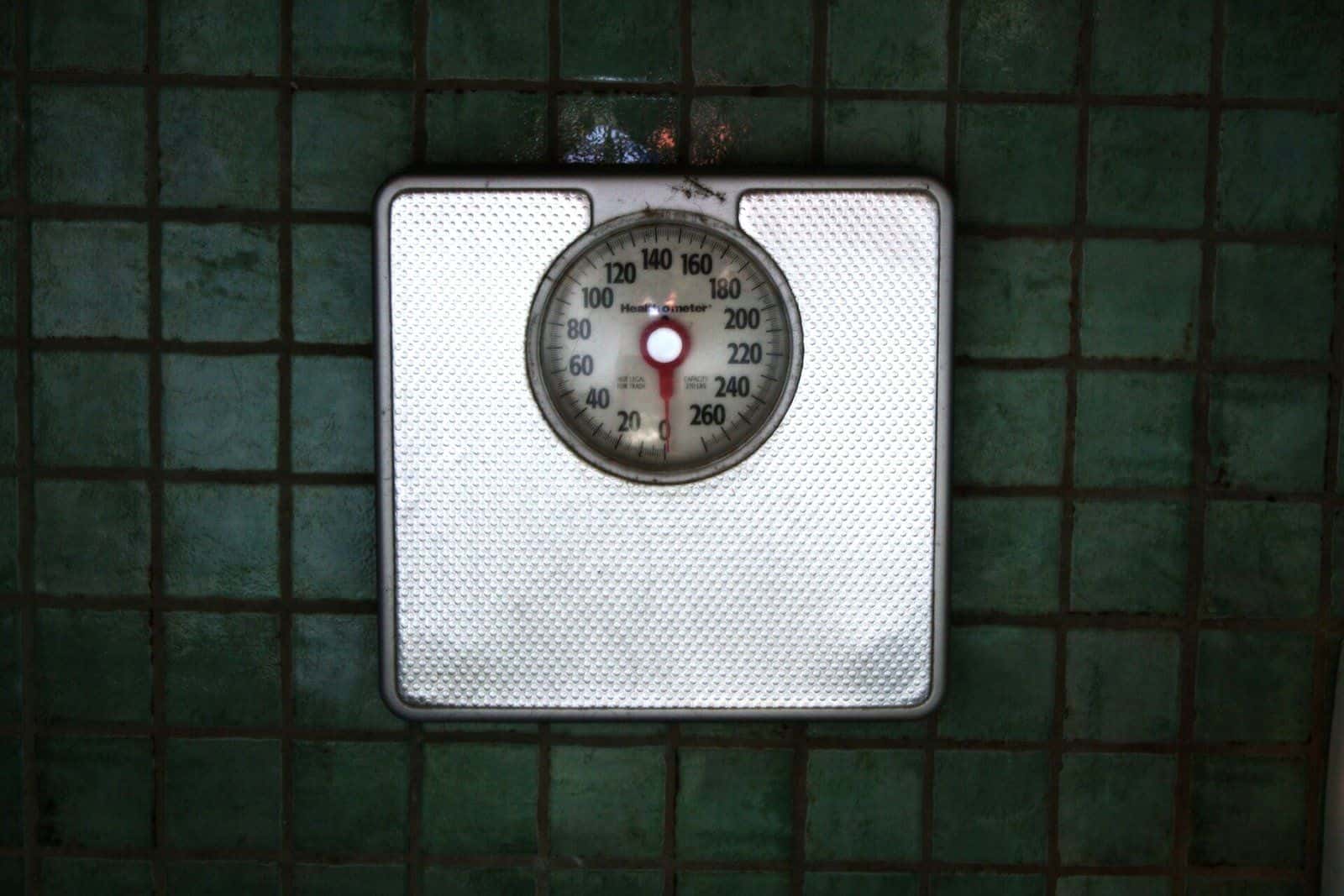
When the scale stops moving, check three things in order before you cut more food. First, whether normal day-to-day swings are hiding a small loss. Second, whether you eat more than you log. Third, whether your calorie target still fits your lighter body. Your metabolism has not shut down: Kevin Hall's model in The Lancet shows that on a fixed intake, weight loss slows by itself over months and years, because a smaller body needs less energy.
Key takeaways
- Judge progress by weekly averages over several weeks, not single weigh-ins.
- Check your logging next: cooking oil, drinks, weekends and bites while cooking add up fast.
- Recalculate your calorie target at your current weight.
- Move a little more before you eat less, and keep protein and strength training up.
Is it a plateau, or normal scale noise?
Your weight moves every day, mostly from water and food in your gut, not fat. A study of about 1,400 European adults in a weight-loss maintenance programme found swings of about 0.35% of body weight within a normal week, with a gain at the weekend and a drop on weekdays. Over Christmas their weight rose by 1.35% on average.
At 80 kg, a 0.35% swing is about 0.3 kg, about the size of a week of steady fat loss at a moderate deficit. One heavy Monday can hide a whole week of progress. After three weeks at 0.25 kg a week you have lost about 0.75 kg, more than two weekly swings, so a three or four week comparison shows it.
To see your trend:
- Weigh yourself on the same scale, at the same time each morning, after the toilet and before breakfast.
- Write down a weekly average, not the daily number.
- Compare the averages over three or four weeks.
The calorie deficit guide explains how glycogen and water move your weight in the first weeks. If your weekly average has stayed flat for several weeks, the stall is real, and the checks below find the cause.
Check 1: do you eat more than you log?
People tend to log less than they eat. In a small study in the New England Journal of Medicine, adults with obesity who said they could not lose weight on low intakes under-reported what they ate by 47% on average, and over-reported their exercise by 51%. That group was chosen because they struggled, so the number does not apply to everyone, but it shows how easy it is to miss food without noticing.
The foods people miss are small, calorie-dense and easy to forget:
| Easy to miss | Roughly |
|---|---|
| 1 tablespoon (13.5 g) of olive oil in the pan | about 120 kcal |
| 1 tablespoon (16 g) of peanut butter from the jar | about 95 kcal |
| 300 ml of whole milk in a large latte | about 185 kcal |
| Two 150 ml glasses of red wine | about 255 kcal |
| 50 g of cooked pasta from someone else's plate | about 80 kcal |
Portions also grow slowly. The bowl of cereal you weighed in week one can hold more by week ten, and nothing in the log changes.
For the next 7 days, log everything, including drinks, sauces and tastes while cooking, and log weekends the same way as weekdays. Weigh the rice, pasta or potatoes at dinner a few times so your eye learns what 150 g looks like again.
If you log with photos, add what the camera cannot see. Cal Clark lets you snap the plate and add a short note such as "fried in 2 tablespoons of olive oil" or "garlic mayo dip", and your note leads the estimate.
Check 2: does your target still fit your weight?
A lighter body needs less energy to move and to keep running, so the target that gave you a 500 kcal deficit at the start gives you a smaller one now. On top of that, your body saves a little extra energy when you diet. Researchers call this adaptive thermogenesis, and a review in Obesity puts it at about 120 kcal on average, with large differences between people.
Take the man from the calorie deficit guide: 30 years old, 178 cm, active 3 to 5 days a week, eating 2,320 kcal. At 85 kg, the Mifflin-St Jeor equation and the activity factor of 1.55 that our calorie calculator uses for exercise 3 to 5 days a week put his maintenance at about 2,820 kcal, a deficit of about 500 kcal. At 77 kg, the same sum gives about 2,690 kcal, so his deficit is down to about 370 kcal, and about 250 kcal after the average adaptive thermogenesis. With the rough rule of 7,700 kcal per kg, that is about 0.2 kg a week. His weight is still falling, but so slowly that his normal weekly swing hides it, and one forgotten tablespoon of oil a day would take half of what is left.
Recalculate your target in the calculator every few kilograms.
Check 3: do you move less than before?
Dieting can make you move less during the day without noticing. In the CALERIE trial, people on calorie restriction burned fewer calories than their new body size predicted, and the authors also found lower physical activity.
A daily step count, compared week by week like your weight, shows whether your everyday movement has dropped. Short walks after meals are an easy way to bring it back. Keep your training sessions too.
What to change, in order
Give each change two or three weeks of weekly averages before you judge it. That is our suggestion, based on how far the scale swings in a normal week.
- Fix the logging gaps you found: oil, drinks, weekends, portions.
- Recalculate your target at your current weight.
- Move a little more in everyday life.
- Then lower your target a little. In Hall's model, each lasting change of about 100 kJ (24 kcal) a day moves your weight by about 1 kg over the long run. We suggest 100 to 200 kcal a day as a first step.
While you do this, keep the weight you lose coming from fat. The ISSN recommends 1.4 to 2.0 g of protein per kg of body weight a day for people who exercise, and its position stand on diets reports that resistance training helps people keep muscle while they lose weight. The guide to protein per day turns those numbers into meals.
A planned break is an option
If you feel worn out, a short break at maintenance calories can help you keep going. In the MATADOR trial, men with obesity either dieted for 16 weeks straight or alternated 2 weeks of dieting with 2 weeks at maintenance over 30 weeks. Among the 36 men who finished, the group with breaks lost more weight (14.1 kg against 9.1 kg), and six months later they were still further below their starting weight. It was one small trial in men, so treat it as one option.
Holidays and busy months also fit better into a plan when you look at the whole week. Cal Clark shows a weekly calorie budget next to the daily one.
When a stall is not a problem
Sometimes the scale stops because you have reached a weight your body and your life can hold. If you are in a healthy range, eat well, train and feel good, you can switch to maintenance and keep the habits.
Talk to your doctor if your weight goes up without a change in eating, if you feel unusually tired or cold, or if you started a new medication. The NHS also advises talking to a GP or other health professional before you change your diet if you have a medical condition, follow a special diet or have had an eating disorder.
Frequently asked questions
How long does a weight loss plateau last?
It has no fixed length. A stall caused by logging gaps or an old target lasts until you fix them, so check those first.
Is "starvation mode" stopping my weight loss?
No. Your body saves some energy when you diet, about 120 kcal on average according to a review in Obesity, but you keep losing fat while you eat less than you burn. Many stalls are a smaller deficit than you think, hidden by scale noise.
Should I eat less or exercise more to break a plateau?
Check your logging and recalculate your target first, because either can show that your deficit has shrunk. After that, more everyday movement is the gentlest change, and a small cut in calories is the next one.
Sources
- Hall KD, Sacks G, et al. Quantification of the effect of energy imbalance on bodyweight. The Lancet, 2011.
- Turicchi J, O'Driscoll R, et al. Weekly, seasonal and holiday body weight fluctuation patterns among individuals engaged in a European multi-centre behavioural weight loss maintenance intervention. PLoS One, 2020.
- Lichtman SW, Pisarska K, et al. Discrepancy between self-reported and actual caloric intake and exercise in obese subjects. N Engl J Med, 1992.
- USDA FoodData Central: olive oil, peanut butter, whole milk, red wine, pasta, cooked.
- Müller MJ, Bosy-Westphal A. Adaptive thermogenesis with weight loss in humans. Obesity, 2013.
- Mifflin MD, St Jeor ST, et al. A new predictive equation for resting energy expenditure in healthy individuals. Am J Clin Nutr, 1990.
- Redman LM, Heilbronn LK, et al. Metabolic and behavioral compensations in response to caloric restriction: implications for the maintenance of weight loss. PLoS One, 2009.
- Jäger R, Kerksick CM, et al. ISSN position stand: protein and exercise. JISSN, 2017.
- Aragon AA, Schoenfeld BJ, et al. ISSN position stand: diets and body composition. JISSN, 2017.
- Byrne NM, Sainsbury A, et al. Intermittent energy restriction improves weight loss efficiency in obese men: the MATADOR study. Int J Obes, 2018.
- NHS Better Health. Calorie counting.
This article is general information, not medical advice. Talk to a doctor or a registered dietitian before you make big changes to your diet.
Log your meals with a photo.
Cal Clark shows calories and macros in seconds. Join the waitlist and we'll tell you when the app goes live.
3-day free trial. No ads.