How to Count Calories Without Weighing Everything
You can track calories without a food scale. Measure the few foods that swing your total, use labels and units for the rest, and watch your weight trend.
 Greg, Cal Clark team8 min read
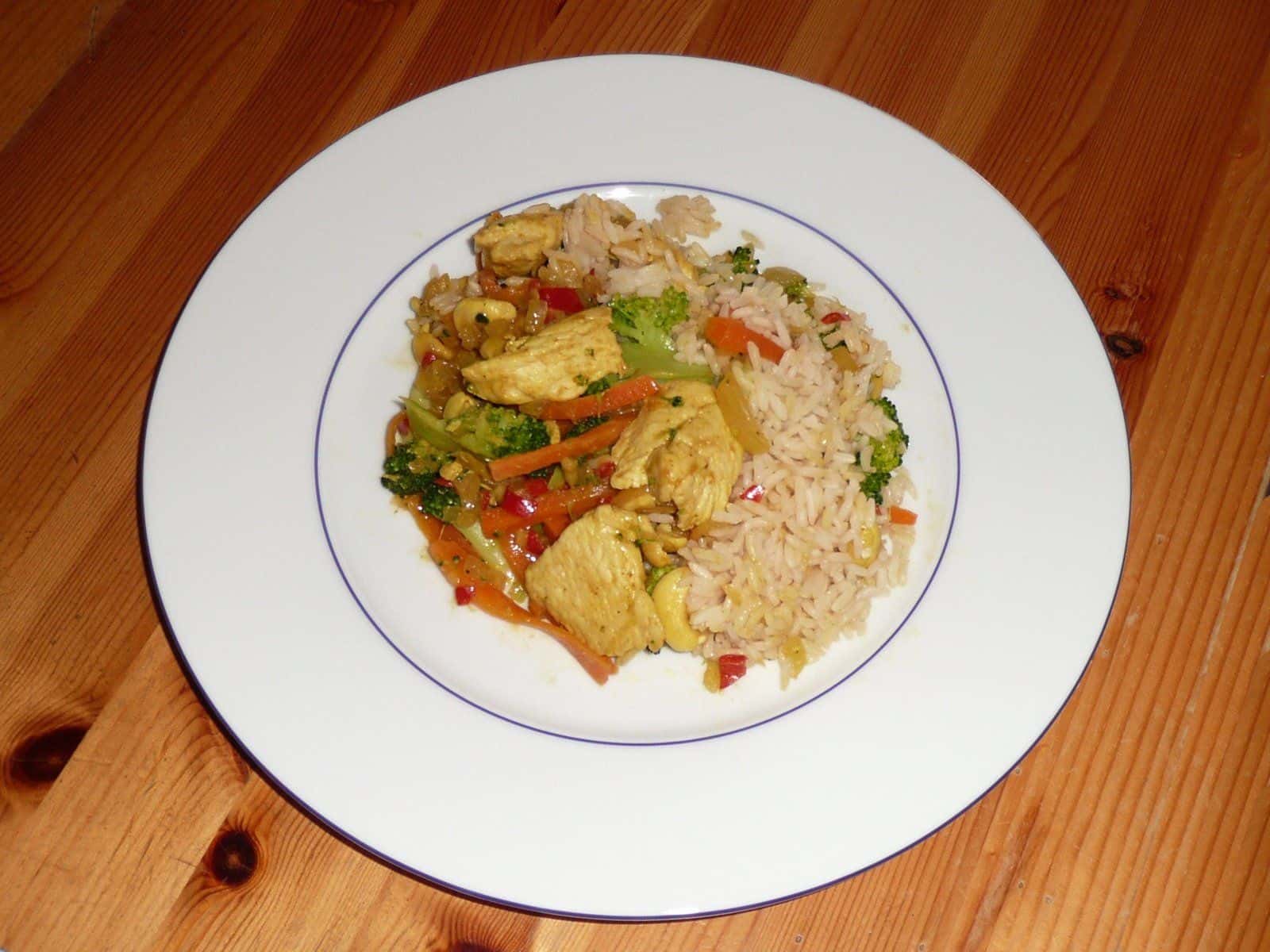
You can count calories without weighing every meal. Measure the few foods that swing your total most: your usual portions of rice, pasta, potatoes and meat, plus cooking oil, nut butter and cheese. Use labels and whole units for packaged food, estimate the rest, and let your weight trend over several weeks show whether your numbers work. New to logging? Start with how to track calories.
Key takeaways
- Estimates by eye are often far off, especially for meat and fish.
- Big portions of starch and meat, and small amounts of fat, swing your total most. Measure those for a week.
- Labels and whole units (eggs, slices, pots) give you measured numbers without a scale.
- In studies, people who logged more often lost more weight.
How far off are estimates by eye?
In a study of 67 adults in the Journal of Nutritional Science, people estimated the weight of foods that had been weighed in advance. For regularly shaped foods, only 29% of estimates made with household measures such as cups and spoons landed within 25% of the true weight, and 8% within 10%. A hand method based on finger widths did better: 80% within 25%, and 13% within 10%. Fish fillets, chicken breasts and steaks were far off with both methods.
A review of 334 studies in Nutrition Reviews found that only 21 had checked a portion estimation tool against weighed food at all, and few of those checks were high quality. Image-based tools did better than food models and household utensils.
Put your effort into the few foods where a rough guess costs the most calories.
Where a guess costs the most calories
A 30% mistake on a cucumber barely moves your day. The same mistake on a plate of pasta or a piece of chicken does.
| Food | kcal per 100 g | A 30% miss on an example portion |
|---|---|---|
| Pasta, cooked | 158 | 200 g: about 95 kcal |
| Chicken breast, roasted | 165 | 150 g: about 74 kcal |
| White rice, cooked | 130 | 150 g: about 59 kcal |
| Peanut butter | 598 | 32 g: about 57 kcal |
| Cheddar | 410 | 40 g: about 49 kcal |
| Olive oil | 884 | 15 g: about 40 kcal |
Starches and meat are not especially dense, but the portions are big, so a 30% miss adds up. Fats work the other way: the portions are small and dense. Oil also goes missing completely when it soaks into food, and a forgotten tablespoon is about 120 kcal, not a 30% miss.
Step 1: Measure a few foods for one week
You do not need to weigh forever. Borrow or buy a kitchen scale for a week and weigh only the foods from the table above, as you eat them normally.
By the end of the week you know:
- your usual portion of rice, pasta and potatoes, cooked, on your own plates and bowls
- what 100 g and 150 g of chicken, fish or meat look like on your plate
- how much oil goes into your pan, if you pour it into a tablespoon once
- what one tablespoon of nut butter looks like on your knife
After that week, your eye has a reference for the foods that matter. We suggest a quick check with the scale every few weeks to keep that reference fresh.
Measuring spoons do most of the job for fats if you skip the scale. One tablespoon of olive oil is 13.5 g and about 120 kcal, and one tablespoon of smooth peanut butter is 16 g and about 95 kcal.
Step 2: Use numbers that are already measured
A lot of food comes with its weight printed on it. Log packaged food from the label, and count whole units where you can: eggs, slices of bread, pots of yoghurt, bars, cans. To split a pack, divide by the number of meals: a 400 g pack of chicken shared over three meals is about 133 g each.
Labels are close but not exact. In the US, a product fails an official check if its calories come out more than 20% above the value on the label, and the rule does not stop a label from reading high. UK guidance explains that the values in a nutrition table are averages that allow for the natural variation in foods. For everyday tracking, we treat the label as the best number you have.
Step 3: Estimate the rest
For vegetables, salad and most fruit, a rough guess is fine, because they are low in calories per gram. For mixed dishes such as stews, curries and casseroles, log the main ingredients if you cooked them, or a close match if you did not.
Hand guides help as a backup. In a study of 1,081 Japanese adults, portions counted with the hand matched weighed food records closely for fruit (r 0.85), vegetables (0.76) and protein foods (0.72), and less closely for grains (0.59). A hand guide keeps your portions steady from day to day, and gives you a rough size rather than exact grams.
If you often eat chicken breasts, fish fillets or steaks, weigh those a few times, because the finger-width study found them the hardest to judge by eye.
Step 4: Take a photo and add what it can't see
A photo records what was on the plate, so you do not have to remember it later. In a systematic review of 52 studies, AI-based photo estimates had average calorie errors from under 1% to about 38%, about as accurate as people estimating by eye, and did best on simple plates. A 2026 test of four apps found they undercounted fat in particular, as the guide to photo accuracy explains. The oil and the sauce are often what you know and the camera does not.
Cal Clark lets you snap the plate and add a short note such as "fried in 1 tablespoon of olive oil" or "half the rice", and your note leads the estimate. Each ingredient has its own numbers, so you can change the grams after you weigh something.
Raw or cooked: log the state you measured
Rice, pasta and meat change weight when you cook them. Rice and pasta take on water, and meat loses water. A label on dry pasta gives the numbers for dry pasta, so log it as dry if you weighed it dry, and as cooked if you portioned it from the pot. Search for the entry that says "cooked" or "dry" and match it to what you measured.
Does logging without a scale work?
We found no study that compared tracking without a scale with weighing everything, but logging often is linked to losing more. A systematic review of 22 studies found a consistent link between self-monitoring and weight loss. In a 24-week study of 142 adults, people who lost at least 10% of their weight opened their online food diary 2.7 times a day on average, against 1.7 for the rest. Time spent logging fell from about 23 minutes a day in the first month to about 15 in the sixth. Both studies show a link, not proof that logging alone caused the loss.
Your weekly weight average tells you whether your estimates are good enough. If it moves at the rate you planned, keep going. If it stays flat for several weeks, the guide to weight loss plateaus walks through what to check, starting with your logging.
When to weigh after all
Weigh your food if a doctor or dietitian set a diet for a medical reason, for example for diabetes or kidney disease, or if you prepare for a competition. A week of weighing is also the quickest way to find the gap when your weight has not moved for several weeks.
If tracking food makes you anxious, or you have had an eating disorder, talk to your doctor or a dietitian before you start.
Frequently asked questions
Can I lose weight counting calories without a scale?
Your weight trend shows whether your numbers work for you. Measure the foods that swing your total most, log most days, and check your weekly average after a few weeks.
How many calories are in a tablespoon of oil?
One tablespoon of olive oil (13.5 g) has about 120 kcal.
How do I estimate portions with my hand?
Use the same hand and the same plates each time, and use the result to keep portions steady. The finger-width study found hand estimates much better than household measures for regularly shaped foods, and poor for meat and fish.
Should I weigh my food at first and then stop?
That works for many people. A week of weighing teaches your eye your usual portions, and a quick check every few weeks keeps them on track. Saved meals keep their numbers for next time.
Sources
- Gibson AA, Hsu MS, et al. Accuracy of hands v. household measures as portion size estimation aids. Journal of Nutritional Science, 2016.
- Amoutzopoulos B, Page P, et al. Portion size estimation in dietary assessment: a systematic review of existing tools, their strengths and limitations. Nutrition Reviews, 2020.
- Shinozaki N, Murakami K, et al. Is the hand scale an appropriate tool for guiding and estimating food portions? An evaluation among free-living adults. Appetite, 2025.
- US Code of Federal Regulations. 21 CFR 101.9, Nutrition labeling of food.
- UK Government. Nutrition labelling.
- Shonkoff E, Cara KC, et al. AI-based digital image dietary assessment methods compared to humans and ground truth: a systematic review. Annals of Medicine, 2023.
- Burke LE, Wang J, Sevick MA. Self-monitoring in weight loss: a systematic review of the literature. J Am Diet Assoc, 2011.
- Harvey J, Krukowski R, et al. Log often, lose more: electronic dietary self-monitoring for weight loss. Obesity, 2019.
- USDA FoodData Central: pasta, cooked, chicken breast, roasted, white rice, cooked, peanut butter, cheddar, olive oil.
This article is general information, not medical advice. Talk to a doctor or a registered dietitian before you make big changes to your diet.
Log your meals with a photo.
Cal Clark shows calories and macros in seconds. Join the waitlist and we'll tell you when the app goes live.
3-day free trial. No ads.