Calorie Deficit Diet Plan: A 7-Day Plan With Calories
A calorie deficit diet plan starts with your own target. Get the number, then use a 7-day plan with calories and protein for every meal.
 Greg, Cal Clark team8 min read
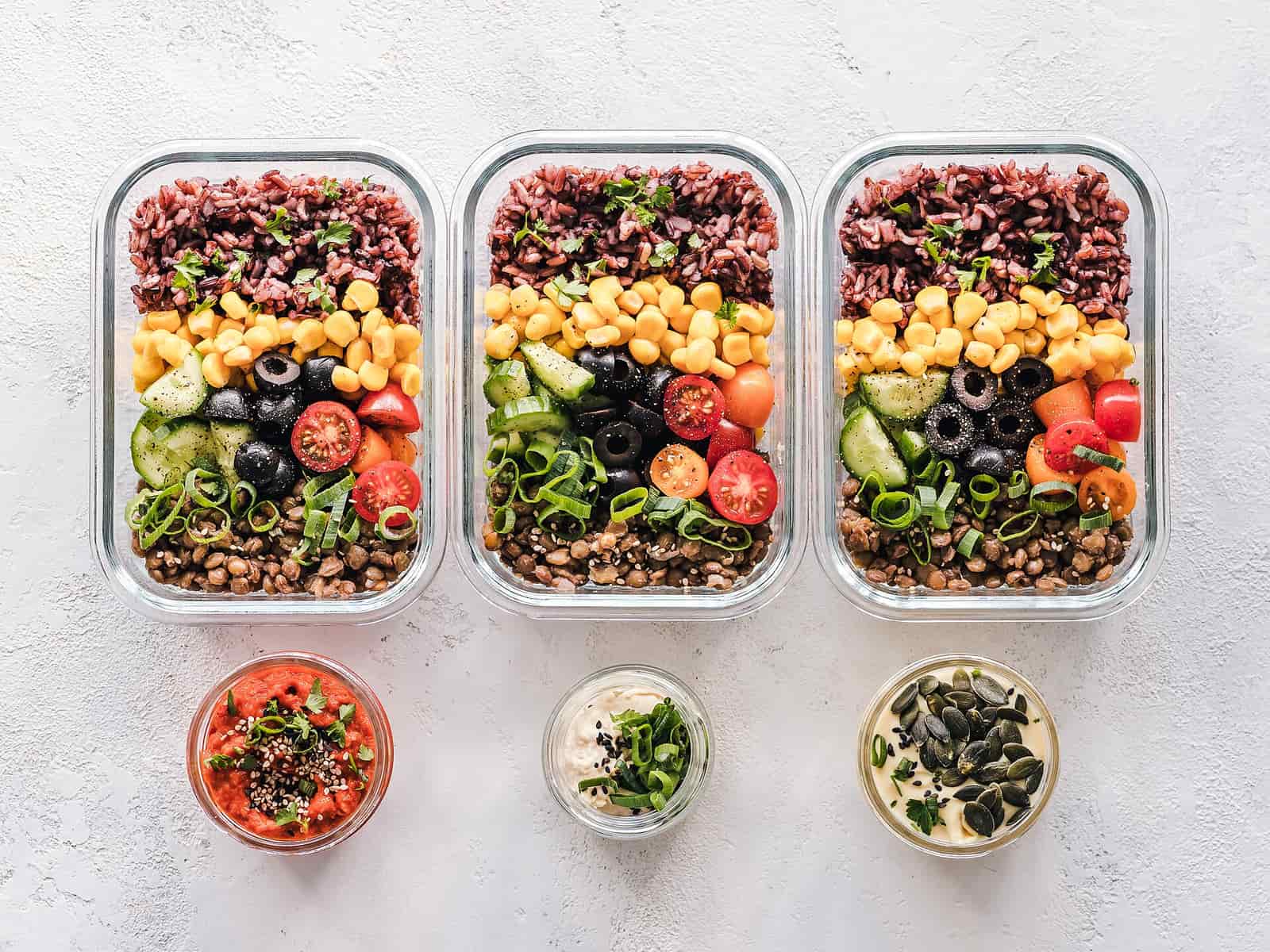
A calorie deficit diet plan has three parts: a daily calorie target about 500 kcal below what you burn, a protein floor, and meals that fit inside both. Every meal in the 7-day plan below has its calories and protein written next to it. The plan covers the main protein foods and leaves a calorie budget for everything else, so it fits a target of 1,700 kcal or any other number you calculate.
Key takeaways
- Start from your own calorie target, not from a plan with a fixed number. A 500 kcal deficit is a sensible default.
- Set a protein floor of 1.2 to 1.6 g per kg of body weight to keep muscle while you lose weight.
- Build three meals around a protein food, then spend the calories left on vegetables, fruit, starches, oil and snacks.
- Check the plan against your weight trend over 2 to 3 weeks and change the target if it is off.
Quick answer: how to build the plan
| Step | What you do | Example (woman, 70 kg) |
|---|---|---|
| 1 | Work out maintenance calories and subtract about 500 kcal | 2,190 - 500 = about 1,700 kcal |
| 2 | Set protein at 1.2 to 1.6 g per kg | 84 to 112 g a day |
| 3 | Put a protein food in each of three meals | 800 to 1,050 kcal counted |
| 4 | Spend the calories left on everything else | 650 to 900 kcal left |
Step 1: Set your daily calorie target
Your target is your maintenance calories minus the deficit you choose. The 2013 US obesity guideline recommends a cut of 500 to 750 kcal a day, and the NHS suggests losing 0.5 to 1 kg a week. The guide to calories for weight loss shows the formula step by step, and the calorie calculator does it for you.
Here is the example used on this page, calculated with the Mifflin-St Jeor equation. It is an example, not a real person.
A woman, 35, 168 cm, 70 kg, office job, walks most days. Resting energy: 10 × 70 + 6.25 × 168 - 5 × 35 - 161 = 1,414 kcal. Activity factor 1.55: about 2,190 kcal a day to stay the same weight. Target for weight loss: about 1,700 kcal a day.
If you want to know whether a smaller or bigger cut suits you, read what a calorie deficit is and how big yours should be.
Step 2: Set a protein floor
A 2015 review suggests 1.2 to 1.6 g of protein per kg of body weight a day for people losing weight, with at least about 25 to 30 g in each meal. For 70 kg that is 84 to 112 g a day. The protein per day guide covers other goals and body weights.
The 7-day calorie deficit diet plan
Each meal counts the foods listed, with values from USDA FoodData Central (SR Legacy, per 100 g) multiplied by the weight. Vegetables, fruit, oil, sauces and drinks are not counted. The last column shows what is left of a 1,700 kcal target for them.
| Day | Breakfast | Lunch | Dinner | Counted kcal | Protein (g) | Left of 1,700 kcal |
|---|---|---|---|---|---|---|
| 1 | 250 g Greek yogurt (nonfat), 40 g oats | 120 g tuna, 60 g whole-wheat bread | 150 g chicken breast (raw), 150 g lentils | 931 | 114 | 769 |
| 2 | 100 g boiled egg (2 eggs), 150 g Greek yogurt | 200 g cottage cheese (1% fat), 60 g bread | 150 g salmon (cooked) | 804 | 97 | 896 |
| 3 | 250 g Greek yogurt, 40 g oats | 200 g firm tofu | 150 g lean beef patty (cooked) | 848 | 102 | 852 |
| 4 | 200 g cottage cheese, 60 g bread | 120 g tuna, 60 g bread | 150 g chicken breast (raw), 150 g lentils | 939 | 117 | 761 |
| 5 | 80 g smoked salmon, 100 g cottage cheese, 60 g bread | 120 g tempeh | 150 g lean beef patty (cooked) | 820 | 96 | 880 |
| 6 | 250 g Greek yogurt, 40 g oats | 150 g salmon (cooked) | 200 g firm tofu | 848 | 102 | 852 |
| 7 | 150 g boiled egg (3 eggs), 60 g bread | 120 g tuna, 60 g bread | 150 g chicken breast (raw), 150 g lentils | 1,028 | 111 | 672 |
Chicken and tofu are weighed raw, and the salmon and beef are weighed cooked. Cooking removes water, so a raw weight and a cooked weight of the same food are different numbers. Log the food in the state you weighed it. Oil for a pan is not counted, and one tablespoon of olive oil is about 120 kcal.
The protein column runs from 96 to 117 g, inside the 84 to 112 g range on five days and a little above it on two. More protein is fine.
What to eat with the calories left
The plan leaves between 672 and 896 kcal a day, an average of about 810, for the rest of your food. That is a lot of room, and you should use it, because a plan you can keep is worth more than a tight one.
- Vegetables with every lunch and dinner. They add little energy and a lot of volume.
- A starch with dinner: rice, potatoes or pasta. Weigh it dry or cooked and log it the way you weighed it.
- Fruit as a snack or with breakfast.
- Oil, butter and dressings, measured with a spoon. They are the calories people forget most.
- Something you enjoy, such as chocolate, a glass of wine or a pastry. A day over budget is a normal day, and the weekly average is what counts.
Cal Clark sets calorie and macro targets for the goal you pick and shows what is left today, with calories and protein side by side, so you see what is left after your protein food at a glance. It is coming soon to iOS and Android: join the waitlist.
How to change the plan for a different calorie target
The counted meals stay the same. Only the budget left changes: your target minus the counted calories. On average the plan counts about 890 kcal a day.
| Daily target | Average left for the rest |
|---|---|
| 1,500 kcal | about 610 kcal |
| 1,700 kcal | about 810 kcal |
| 2,000 kcal | about 1,110 kcal |
| 2,300 kcal | about 1,410 kcal |
The NHS notes that very low calorie diets, under 800 or 1,200 kcal a day, are not suitable or safe for everyone and should run with professional support.
Vegetarian version
Every meat or fish plate has a vegetarian swap in the same range. Use 200 g firm tofu (288 kcal, 35 g protein), 120 g tempeh (230 kcal, 24 g protein), three boiled eggs (233 kcal, 19 g protein) or 200 g cottage cheese with bread (295 kcal, 32 g protein). A vegetarian day could be 250 g Greek yogurt with 40 g oats (287 kcal, 29 g), 200 g tofu (288 kcal, 35 g) and 120 g tempeh (230 kcal, 24 g): 805 kcal and 88 g of protein, with about 895 kcal left of a 1,700 target.
Where this does not work
- The plan is built from one example target. Your own number comes from the steps above.
- Counted foods only. Vegetables, oil, sauces and drinks sit outside the table, so a day that looks right on paper can run over if you skip logging them.
- Food records from memory run low. In a small study, people who said they could not lose weight on a low intake under-reported what they ate by 47% on average. Weighing food for a week or two narrows the gap.
- Judge the trend over weeks. If your weight has not moved after 2 to 3 weeks, lower the target a little or see why you may be stuck on a plateau.
- Talk to your doctor first if you are pregnant or breastfeeding, under 18, have had an eating disorder, take medication for diabetes, or have a long-term health condition.
Frequently asked questions
How many calories should a calorie deficit diet plan have?
It should have your maintenance calories minus about 500 kcal. For many adults that lands between 1,500 and 2,300 kcal a day. Fixed plans of 1,200 or 1,500 kcal fit some people and are too low for others, so calculate your own number first.
Can I eat the same meals every week?
Yes. Repeating meals makes logging faster and keeps the numbers known. Swap the protein food or the starch when you get bored, and keep the protein floor.
Do I need to count calories on a deficit plan?
You need some way to know the numbers, at least for a few weeks. A systematic review of 22 studies found a consistent link between tracking food and losing weight. The guide to counting calories without a scale shows which foods are worth weighing.
What is a good calorie deficit for beginners?
About 500 kcal a day. It is big enough to show on the scale within a few weeks and small enough to live with.
Bottom line
A calorie deficit diet plan works when the number is yours: maintenance calories minus about 500 kcal, with protein set first. Use the 7-day plan as a frame, spend the calories left on food you like, and judge the result by your weight trend over a few weeks.
Read more
- What is a calorie deficit, and how big should yours be?
- How many calories to eat to lose weight
- High protein meals to lose weight
Sources
- Mifflin MD, St Jeor ST, et al. A new predictive equation for resting energy expenditure in healthy individuals. Am J Clin Nutr, 1990.
- Jensen MD, Ryan DH, et al. 2013 AHA/ACC/TOS guideline for the management of overweight and obesity in adults. Circulation, 2014.
- NHS. Obesity: treatment.
- Leidy HJ, Clifton PM, et al. The role of protein in weight loss and maintenance. Am J Clin Nutr, 2015.
- Burke LE, Wang J, Sevick MA. Self-monitoring in weight loss: a systematic review of the literature. J Am Diet Assoc, 2011.
- Lichtman SW, Pisarska K, et al. Discrepancy between self-reported and actual caloric intake and exercise in obese subjects. N Engl J Med, 1992.
- USDA FoodData Central. Food composition database and Oil, olive, salad or cooking.
This article is general information, not medical advice. Talk to a doctor or a registered dietitian before you make big changes to your diet.
Log your meals with a photo.
Cal Clark shows calories and macros in seconds. Join the waitlist and we'll tell you when the app goes live.
3-day free trial. No ads.