How to Track Calories: A Simple Routine for Beginners
Track calories by logging each meal as you eat it, using a photo, a barcode or a search, and weighing the foods that are easy to misjudge. A week-one routine.
 Greg, Cal Clark team8 min read
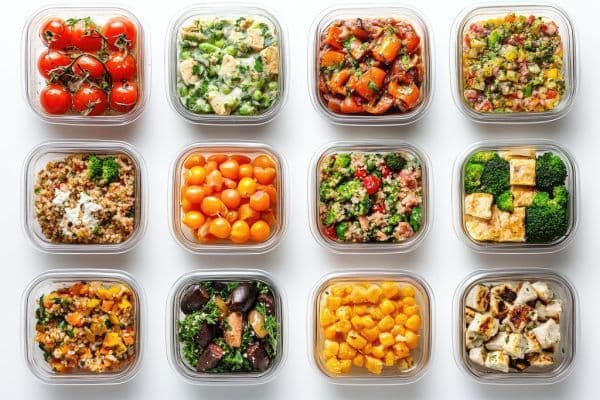
How do you track calories? Log every meal and drink right after you eat it, using a photo, a barcode scan, a food search or a short description, and compare the total with a daily target. Weigh the few foods that are easy to misjudge, such as oil, rice, pasta and cheese. There are six ways to log. Start with the easiest one you will use, then follow the week-one routine below.
Key takeaways
- Log as you eat. In one small study, ten people with obesity who said they ate little under-reported by 47%.
- Start with the easiest method that you will use. People who logged more often lost more weight in a 2019 trial.
- Weigh or measure only the foods that swing the total: oil, rice, pasta, nuts, cheese.
- In one trial, logging took about 23 minutes a day in month 1 and about 15 minutes by month 6, among people still logging.
How do you track calories?
- Get a daily calorie target from the calorie calculator.
- Log each meal right after you eat it, by photo, barcode, search or description.
- Add the oil, sauces, dips and drinks, which are the items most often left out.
- Weigh the dense foods once and reuse the numbers.
- Look at your weekly average.
Why tracking helps
A systematic review of 22 studies, mostly on food tracking, found that people who monitored what they ate lost more weight. Most of these studies were small and many people dropped out, and they show an association, not proof that tracking causes the loss. In a 2019 study in Obesity, people who logged more often lost more weight. At month 6, people who lost more weight did not spend more time logging than people who lost less. Time spent fell from about 23 minutes a day in month 1 to about 15 minutes in month 6, among those still logging. That trial used an electronic journal inside a structured group program, mostly with women, so the numbers may not match your situation.
Six ways to log, side by side
| Method | How it works | Good for | Where it falls short |
|---|---|---|---|
| Photo | Snap the plate, review the list | Home meals, restaurants, speed | Oil, sauces and portion size are hard to see |
| Describe | Type or say what you ate | Meals without a photo, saved habits | You have to remember every item |
| Barcode | Scan the pack | Packaged food | Check the serving size on the label |
| Search | Look up a food, set grams | Single foods, fruit, snacks | Choosing between similar entries takes time |
| Kitchen scale | Weigh the food | Rice, pasta, oil, cheese, nuts | Slow if you do it for every item |
| Notebook | Write food and a guess | No phone, no setup | Easy to skip, totals by hand |
You can mix methods. Use a photo for a plate, a barcode for a yoghurt, and the scale for the oil you cook with. For how close a photo estimate gets, read how accurate counting calories from a photo is, and for a scale-free routine, see how to count calories without weighing everything.
After a photo, Cal Clark asks "Anything the photo can't show?" You add the oil, the sauce or the dip in that note, and the note leads the estimate. It is coming soon to iOS and Android: join the waitlist.
What to log first
Log the items that add the most calories.
- Cooking fat. One tablespoon of olive oil (13.5 g) is 119 kcal, and it is easy to forget.
- Drinks. Milk in coffee, juice, alcohol and sugary drinks count.
- Sauces and dips. Add them as their own items.
- Starches. Rice and pasta gain a lot of weight when cooked, so weigh them the same way every time, raw or cooked.
- Snacks and tastes while cooking.
Packaged food needs one extra check. The US FDA explains that the serving size is the amount people typically eat, not a recommendation, and the calories you eat depend on how many servings you have. If the pack holds two servings and you eat all of it, double the calories on the label. If a label lists 180 kcal per serving and the pack holds 2 servings, the whole pack is 360 kcal.
Weigh rice the same way every time
Cooked long-grain white rice has 130 kcal per 100 g. The same rice, raw, has 365 kcal per 100 g. Cooking adds water, so 100 g cooked is a different amount of rice from 100 g raw. Pick one of those two entries and use it every time.
A plate with 150 g of the cooked rice is 195 kcal. Log those same 150 g against the raw entry and the line says about 548 kcal.
One plate, written out
| Food | Amount | kcal |
|---|---|---|
| Cooked long-grain white rice | 150 g | 195 |
| Olive oil | 1 tablespoon (13.5 g) | 119 |
| These two lines | 314 |
The rice figure is 130 kcal per 100 g, from USDA FoodData Central, cooked long-grain white rice. The oil figure is 884 kcal per 100 g, and 1 tablespoon weighs 13.5 g, from USDA FoodData Central, olive oil. Add the chicken, the vegetables and any sauce as their own lines. A sauce you cannot see still belongs on the log.
Your first week
| Day | What to do |
|---|---|
| 1 | Get your target. Log your usual breakfast, lunch and dinner. Do not change how you eat yet. |
| 2 to 3 | Add drinks and snacks. Save the meals you eat often. |
| 4 | Weigh the oil, rice, pasta and cheese you use, once, and note the grams. |
| 5 to 6 | Log as you eat, not at night. |
| 7 | Add up the week and divide by seven. Compare with your target. |
If your weekly average is far above or below your target, change one thing, such as a smaller portion of rice, rather than everything at once.
Why logging from memory runs low
In a small study in the New England Journal of Medicine, ten people who said they could not lose weight on a low intake under-reported what they ate by 47% on average. It was a small group of people who had struggled with weight, so it does not show what happens to everyone. It does show that reports from memory can miss a lot. Logging each meal when you eat it gives you less to forget.
How do you track calories when you eat out?
Log the main dish, then add the extras as their own lines.
- Oil or butter the kitchen cooked with.
- Sauce on the side or on the plate.
- Bread and drinks.
When you are not sure of a portion, log your best guess and check the weekly trend. A photo of the plate gets the visible food down. The oil and the sauce are the part you add yourself. How accurate counting calories from a photo is covers how far that photo usually lands.
Where this does not work
- Tracking is not for everyone. If you have had an eating disorder, or counting makes you anxious, skip it and talk to a doctor or dietitian.
- The lowest fixed intakes in the 2013 US obesity guideline start at 1,200 kcal for women and 1,500 kcal for men. Talk to a doctor before aiming lower.
- A calorie number is an estimate, so use the weekly trend.
- If you are pregnant or breastfeeding, under 18, or managing diabetes, ask your doctor before you change what you eat.
Frequently asked questions
What is the easiest way to track calories for beginners?
Start with the method you will do every day. A photo or a barcode scan is a good first choice, because each takes seconds. Add a scale for oil, rice and pasta once you see where the big numbers hide.
Do I need to weigh my food?
Not for everything. Weigh the foods that swing the total, once, and reuse the numbers. Fruit, eggs and packaged foods with a label need no scale.
How long does tracking take each day?
In the 2019 Obesity trial, people spent about 23 minutes a day in the first month and about 15 minutes by month 6, among people still logging. Your own time will differ with the method you pick.
How long do I need to keep tracking?
There is no fixed length. Some people track until they know their usual portions and then check in now and then.
How do I track calories when I eat out?
Log the main dish, then add oil, sauce, bread and drinks as their own lines. When you are unsure of a portion, log your best guess and check the weekly trend.
Should I log rice raw or cooked?
Use the same form every time, and pick the database entry that matches it. Cooked long-grain white rice is 130 kcal per 100 g. The raw rice is 365 kcal per 100 g.
Summary
Track calories by logging each meal as you eat it, adding oil, sauces and drinks, and weighing the few foods that swing the total. Set your target with how many calories to eat to lose weight, and keep protein in view too.
Sources
- Burke LE, Wang J, Sevick MA. Self-monitoring in weight loss: a systematic review of the literature. J Am Diet Assoc, 2011.
- Harvey J, Krukowski R, et al. Log often, lose more: electronic dietary self-monitoring for weight loss. Obesity, 2019.
- Lichtman SW, Pisarska K, et al. Discrepancy between self-reported and actual caloric intake and exercise in obese subjects. N Engl J Med, 1992.
- Jensen MD, Ryan DH, et al. 2013 AHA/ACC/TOS guideline for the management of overweight and obesity in adults. Circulation, 2014.
- US FDA. How to understand and use the Nutrition Facts label.
- USDA. FoodData Central: olive oil. 884 kcal per 100 g; 1 tablespoon is 13.5 g (119 kcal).
- USDA. FoodData Central: rice, white, long-grain, regular, enriched, cooked. 130 kcal per 100 g.
- USDA. FoodData Central: rice, white, long-grain, regular, raw, enriched. 365 kcal per 100 g.
Related
This article is general information, not medical advice. Talk to a doctor or a registered dietitian before you make big changes to your diet.
Log your meals with a photo.
Cal Clark shows calories and macros in seconds. Join the waitlist and we'll tell you when the app goes live.
3-day free trial. No ads.